Primary School in Mangalore (Grade 1 -3 | Ages 6–9)
At ELC, our primary school in Mangalore is built around how children actually grow through curiosity, connection, and independent discovery. As children move into the elementary years, our Montessori environment nurtures future-ready learning that goes far beyond textbooks.
How Curiosity Grows in the Elementary Years
Around the age of six, the questions a child asks grows in volume, scale and meaning. A child who spent their early years nurturing their understanding of objects and ideas around them, now wants to know how it got there, what it is made of, and how it is connected to everything else.
Knowledge as Stories: A Foundation for Future-Ready Learning
All knowledge is best told as stories. Our children explore history, science, mathematics, language, culture, and the natural world. Each of these becomes a language in which they can ask their questions and discover their answers. The stories our children experience are not always from books inside a classroom. Our children discover knowledge and insight from outdoor experiences, conversations with practitioners of science and art, and from each other.
A Community of 21st Century Learners
Elementary children thrive in a community of learners. They discuss, debate, collaborate, and ask thoughtful questions. Purposeful movement is an integral part of their learning, and their growing sense of justice encourages them to think critically about fairness, responsibility, and their role in society.
This approach reflects what researchers describe as essential 21st century skills collaboration, critical thinking, and communication developed not through instruction alone, but through real experience.
Building Independent Learning Skills
The Montessori Elementary environment nurtures curious minds, independent thinkers, and compassionate individuals who have begun to understand themselves, others around them and their place in the world.
This sense of independence is not limited to academics. Children learn to manage their own time, make thoughtful choices, and take ownership of their work, preparing them well for the responsibilities of primary school in Mangalore and beyond.
Reflections from a Teacher at ELC
"A seven-year-old was introduced to parallel and perpendicular lines in geometry. On another day, while we were looking at types of leaf venation, one child looked up and said: 'Oh how is it that there is geometry in plants?'
That moment of connection did not need to be engineered. It arrived on its own, because the child had been given the materials and the time to notice."
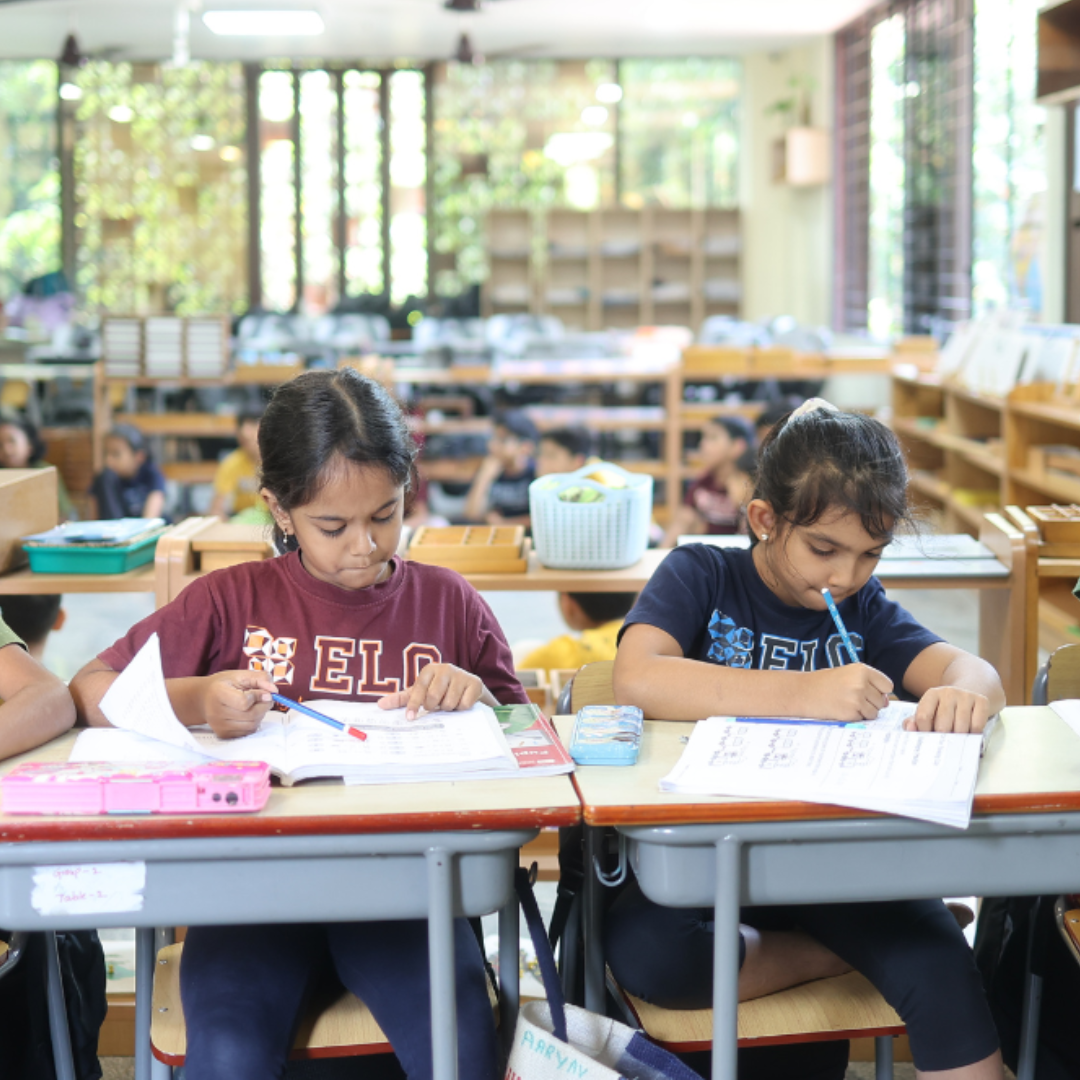
Choosing a primary school in Mangalore is one of the most important decisions parents make for their child's early years. Beyond academics, families are looking for an environment that nurtures independent learning skills, curiosity, and the confidence to ask questions the foundations of future-ready learning that serve children well beyond the classroom.
Frequently Asked Questions
What makes ELC's primary school in Mangalore different?
Our Montessori Elementary programme centers on independent learning skills, real-world discovery, and connecting subjects like history, science and mathematics through stories rather than isolated lessons.
How does ELC prepare children for future-ready learning?
Children learn to discuss, debate, collaborate, and think critically from an early age — skills that support 21st century learning and independent thinking well beyond the classroom. This foundation continues to grow as children move from Primary into Middle School and beyond, within the same philosophical approach.
Is the Montessori Elementary environment suitable for all children?
Yes. The environment is designed to nurture curious minds and compassionate individuals at their own pace, supporting each child's growing understanding of themselves, others, and the world.