The Best School in Mangalore: Your Child’s Learning Journey
From first steps to independent thinkers
ELC is a Best school in Mangalore for children from playgroup through middle school, where learning is child-led and unhurried. At ELC, your child’s journey with us is not a race through milestones. It is a considered passage through thoughtfully-crafted environments designed to meet the child where they are curious, capable, and ready to be trusted. We move with each child, at their pace, toward their full potential. We meet children where they are, at the things they are interested in, and work with them to take it a step forward one day at a time.
A considered passage.
Playgroup in Mangalore (Ages 2 and below)
Stepping Towards Independence
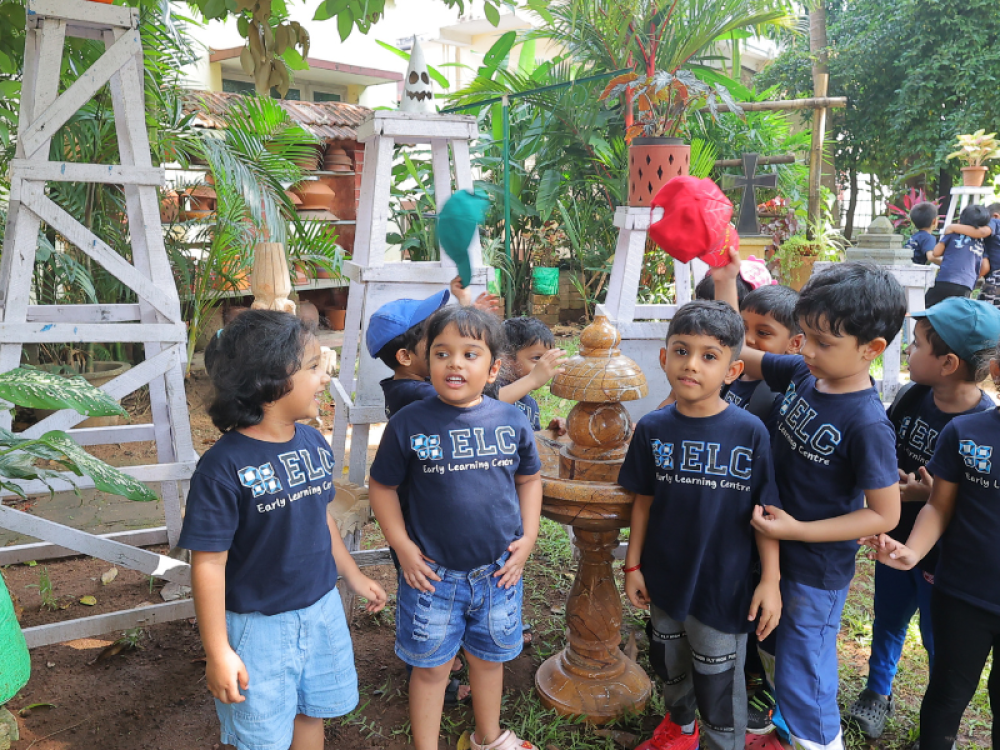
For most children this is their first world beyond home. It is small, warm and predictable, and we create a safe space for the child to trust an adult who is not family, to share a space and interact with other children their age.
The days are spent in movement and conversations. Each activity is a carefully thought out exercise meant to nurture coordination, language, and confidence in their capabilities.
Reflections from a teacher at ELC
“Children seem genuinely happy and free. They are not afraid to ask questions and are calmly confident. The school invests a lot of time and resource on the right kind of environment for the children. Environments that encourage exploration and scientific thought.”
Kindergarten in Mangalore (Pre-KG, LKG and UKG | Ages 3–6)
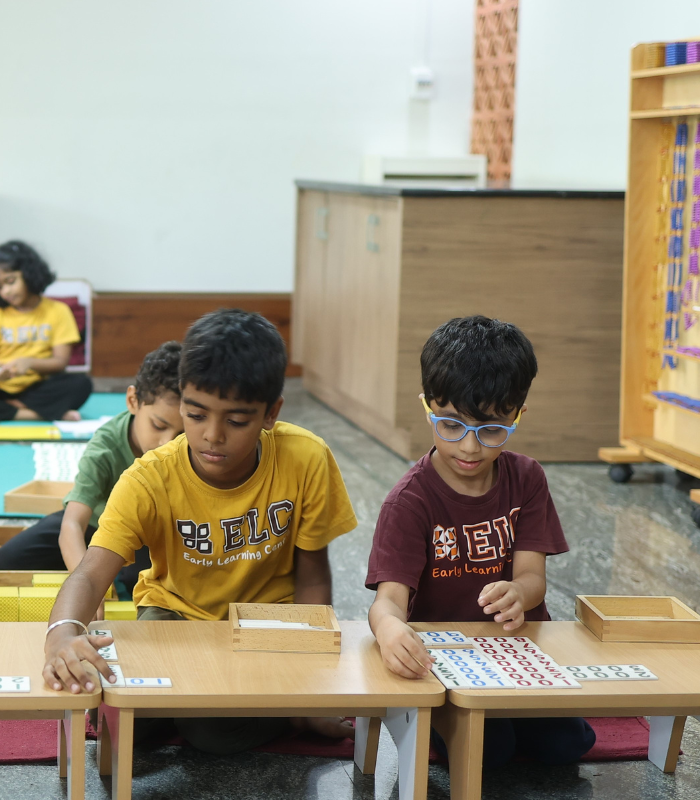
The specially prepared Montessori environment for children between three and six is thoughtfully designed to meet their developmental needs. Children across this age group share a mixed-age environment, learning and growing together as a community. A four-year-old watching a six-year-old solve a puzzle; a six-year-old explaining a concept they have just learnt to a 3-year-old and understanding it better in the process.
Here, learning extends far beyond reading and writing. Children move, explore, discover, converse and learn through purposeful work. They are encouraged to do for themselves what they are capable of doing, while the adults observe carefully, offer guidance at the right moment and gently redirect when needed.
After three years here, what a child carries forward is so much more than academic learning. It is independence, the ability to think and act with purpose, and understanding what it means to belong in a collective and contribute to it meaningfully. It also lays the foundations for the next stage of their learning journey as they move into Primary School.
This is why parents looking for the best school in Mangalore for their young child often choose a Montessori environment.
Reflections from a teacher at ELC
“One of our students needed to use concrete materials — beads, counters. She added numbers by physically counting and combining objects, repeating this many times until addition as ‘putting together’ became fully her own.
Her classmate, however, understood the concept with a short demonstration and was ready to move on to word problems the same day. They each took their own path but reached the same goal.”
Primary School in Mangalore (Grade 1 -3 | Ages 6–9)
Around the age of six, the questions a child asks grows in volume, scale and meaning. A child who spent their early years nurturing their understanding of objects and ideas around them, now wants to know how it got there, what it is made of, and how it is connected to everything else.
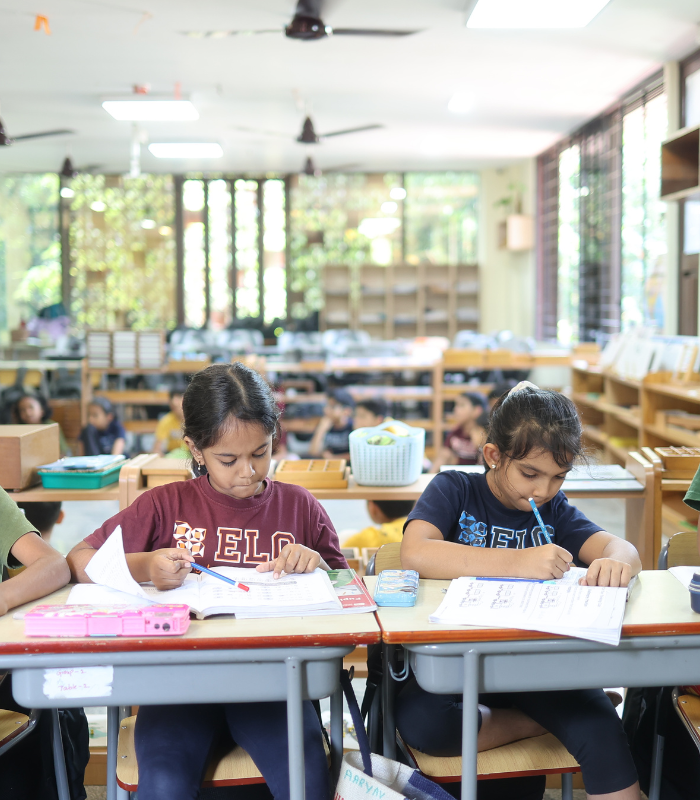
All knowledge is best told as stories. Our children explore history, science, mathematics, language, culture, and the natural world. Each of these becomes a language in which they can ask their questions and discover their answers. The stories our children experience are not always from books inside a classroom. Our children discover knowledge and insight from outdoor experiences, conversations with practitioners of science and art, and from each other.
Elementary children thrive in a community of learners. They discuss, debate, collaborate, and ask thoughtful questions. Purposeful movement is an integral part of their learning, and their growing sense of justice encourages them to think critically about fairness, responsibility, and their role in society.
The Montessori Elementary environment nurtures curious minds, independent thinkers, and compassionate individuals who have begun to understand themselves, others around them and their place in the world.
Reflections from a teacher at ELC
“A seven-year-old was introduced to parallel and perpendicular lines in geometry. On another day, while we were looking at types of leaf venation, one child looked up and said: ‘Oh how is it that there is geometry in plants?’
That moment of connection did not need to be engineered. It arrived on its own, because the child had been given the materials and the time to notice.”
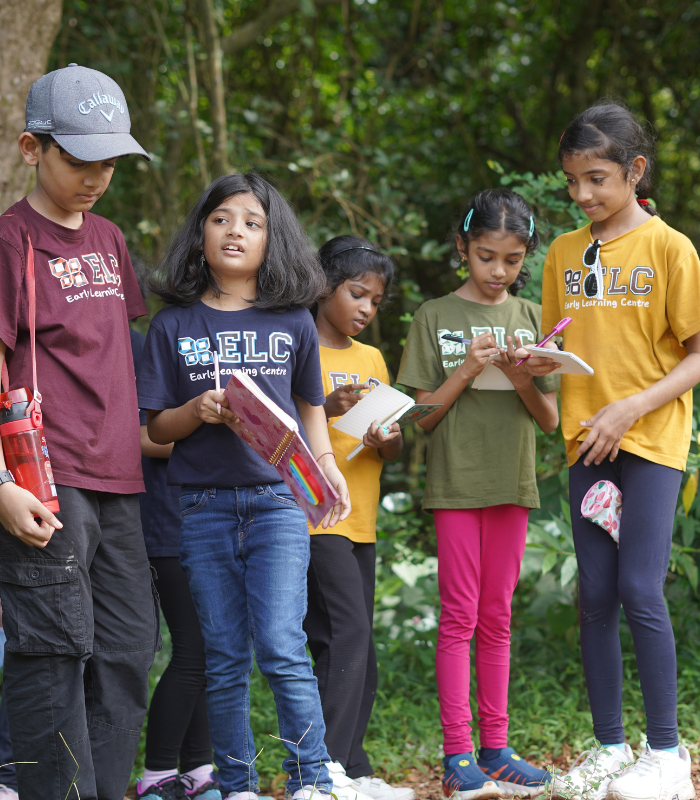
Middle School in Mangalore (Grade 4 -7 | Ages 9–13)
By Grade 4, something shifts in how children think. The wonder is still there, but it now comes with questions that dig deeper: not just what something is, but why it works, why it matters and where it fits into a larger picture. Children begin to reason, weigh and form opinions of their own.
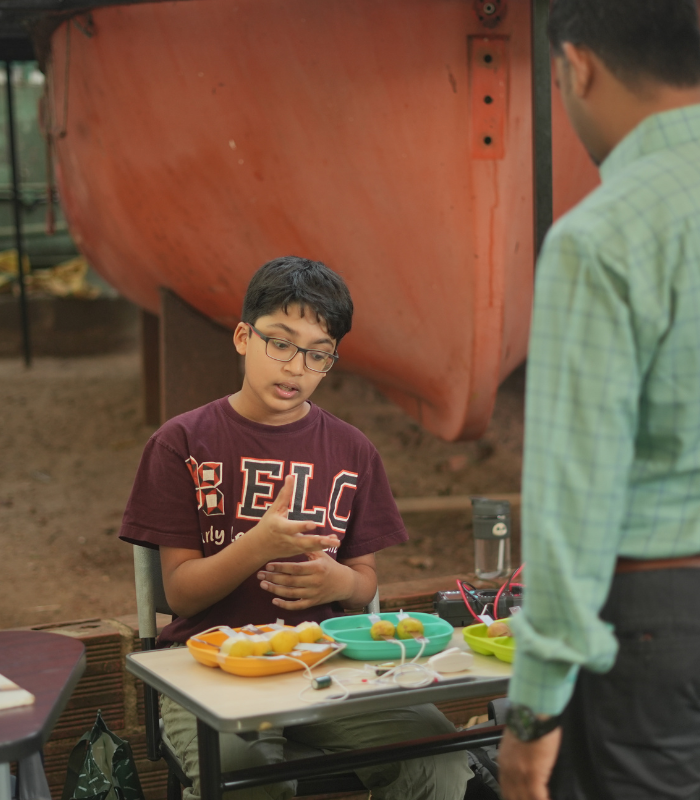
While we continue to support the child towards academic excellence at this stage, we help them look outward, at society, at systems, at themselves in relation to others. A debate over a book, a science experiment gone wrong unexpectedly, a project built and rebuilt until it holds together: these become the real texture of learning. Mathematics, science, language and art stop being separate subjects and start becoming different lenses for the same pursuit: understanding the world and finding themselves within it.
Little of it happens alone. A group project makes a disagreement something to be worked through rather than avoided. A discussion asks a child to defend an idea and then reconsider when someone makes a better one an invaluable foundation for rational thinking.
Underneath it all, is the development of a child who can think clearly, question honestly, and carry curiosity and compassion into their lives at school and beyond.
Reflections from a teacher at ELC
“A day in the life of an ELC student is purposeful. The school supports the child’s independence, curiosity, and overall development. During send-off, children wind up, clean up, and learn responsibility and respect for the space.”
Where Two Frameworks Meet
Child-led, and academically rigorous.
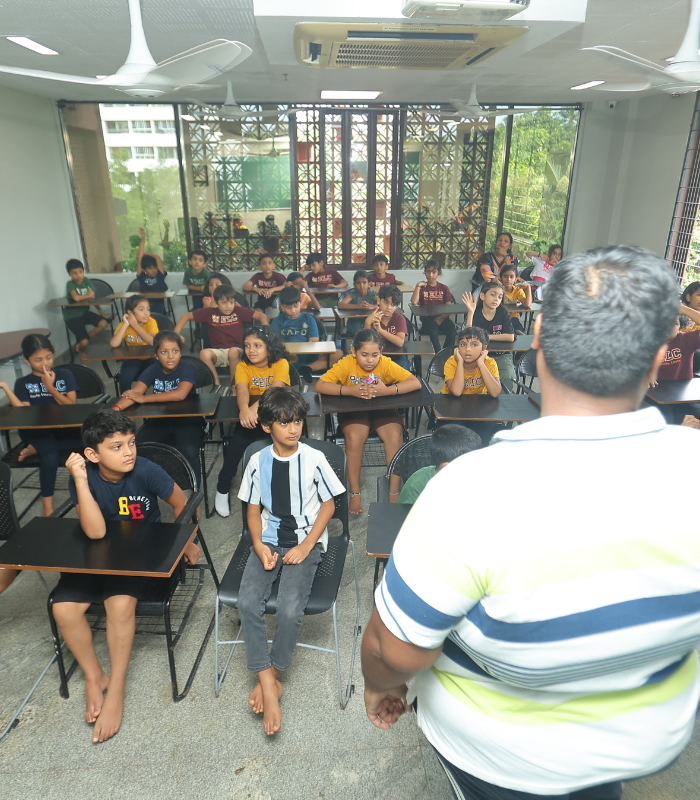
How do Montessori’s child-led approach and Cambridge’s academic rigour co-exist inside an ELC classroom? The two blend seamlessly when we are clear on what’s most important — your child. Cambridge provides the external framework of what a child should ideally learn; Montessori provides the internal framework to help the child construct their own method of learning. The materials, the pace, and the observation-first teaching method carry the child to the same destination — with far greater ownership of the journey.
Reflections from a teacher at ELC
“Two children were independently working with a long-bead chain on the same mat — one doing linear counting, the other finding square roots. Both worked undisturbed, despite being at completely different levels.”
The Inner Life
Education and the art of learning.
Jiddu Krishnamurti believed that the purpose of education was not merely the accumulation of knowledge, but to help them become thinkers who could investigate the world around them without bias. Thinkers who were aware of themselves and the world they live in. At ELC, his work is not a module or an elective, but a culture woven into the fabric of the school. Our teachers listen carefully to your child and recognise that their true potential cannot be reduced to results. Great results are just a by-product of the well-nourished young minds at ELC. Children are not taught what to think. They are given space to notice how they think. The result is profound thought that is the bedrock of scientific inquiry.
Reflections from a teacher at ELC
“ELC does not simply prepare a child for examinations; we work with the child to prepare themselves for the world. Instead of fearing challenges, they learn to approach them positively. Instead of competing for marks, they develop a genuine love for learning.”

CFAL & TLC.
Students completing Middle School at ELC move on to CFAL (Centre for Advanced Learning) and TLC (The Learning Centre), our institutions that continue the same philosophical tradition through the secondary and senior secondary years. ELC does not simply prepare children for the next examination but creates strong roots in STEM that allows them to reach academic excellence with their curiosity for learning still intact.